
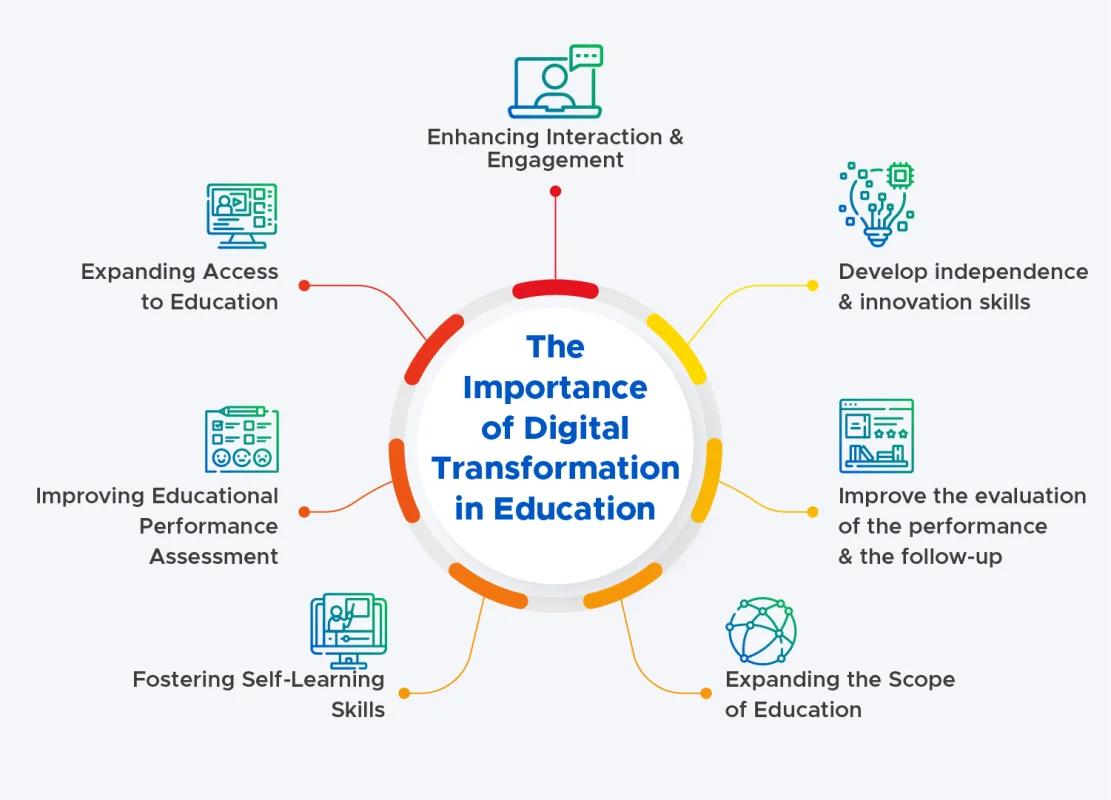
Digital transformation isn’t about buying tablets for every student or moving classes online it’s about fundamentally rethinking how schools operate, teach, and engage with communities using technology as an enabler. While businesses across every sector have undergone massive digital transformation over the past decade, education has largely remained tethered to analog processes and industrial-age structures. This gap is no longer sustainable. Schools that fail to transform digitally aren’t just falling behind competitors; they’re failing to prepare students for the world they’ll actually inhabit while simultaneously hemorrhaging resources to preventable inefficiencies.
Understanding the Digital Transformation Imperative
The urgency around digital transformation stems from converging pressures. Student expectations have fundamentally shifted. Today’s learners are digital natives who expect seamless technology experiences, personalized learning paths, and on-demand access to information. When school technology—such as a modern school parent communication app feels clunky and outdated compared to the apps they use daily, engagement suffers.
Operational pressures are equally compelling. Administrative costs continue climbing while budgets remain flat or decline. Staff burnout reaches crisis levels as capable professionals drown in manual paperwork. Parents demand better communication and transparency. Regulatory compliance grows more complex while resources to manage it shrink.
Perhaps most critically, the competitive landscape has changed. Students have more educational options than ever, including online programs, charter schools, private alternatives, and homeschooling networks powered by technology. Schools that can’t demonstrate value through modern operations and learning experiences will watch enrollment decline.
Pillar 1: Unified Technology Infrastructure
Digital transformation begins with breaking down the data silos and disconnected systems that plague most schools. When student information lives in one system, learning management in another, communications in a third, and finances in a fourth—none talking to each other you don’t have digital infrastructure, you have digital chaos.
The foundation is a comprehensive student information system software that serves as the central hub. This SIS must integrate seamlessly with lms software, communication platforms, hr management system software, finance tools, and other operational systems. Data flows between platforms automatically through APIs and integrations, eliminating duplicate entry and ensuring consistency.
This integrated infrastructure creates the “single source of truth” essential for effective operations. When a new student enrolls, their information populates automatically across all relevant systems. When grades are posted in the LMS, they sync automatically to the transcript. When staff credentials expire, automated alerts trigger renewal workflows.
Building this infrastructure requires strategic planning. It doesn’t happen overnight, but it must follow a coherent roadmap rather than accumulating disconnected point solutions that create future integration nightmares.
Pillar 2: Process Automation and Workflow Optimization
With infrastructure established, the next transformation phase focuses on automating manual workflows that consume disproportionate time and resources.
Start by mapping current processes to identify automation opportunities. Attendance tracking, leave management, purchase approvals, enrollment processing, grade reporting, and parent communication nearly every administrative workflow contains automatable components.
Biometric attendance system implementation exemplifies this transformation. What was once a manual process requiring teacher time, office data entry, and delayed parent notification becomes fully automated. Students check in, systems update, parents are notified, and reports are generated automatically.
Similarly, implementing automated communication workflows transforms how schools engage families. Event reminders, absence notifications, grade updates, and general announcements flow automatically based on triggers in other systems, ensuring timely, consistent outreach without manual effort.
The goal isn’t eliminating human involvement but redirecting it toward high-value activities that require judgment and relationship-building rather than mindless repetitive tasks.
Pillar 3: Data-Driven Decision Making
Digital systems generate vast data, but data without insight is noise. True transformation requires building cultures and capabilities around data-driven decision making.
This starts with accessible visualization through a comprehensive dashboard for schools that presents complex data in intuitive formats. Different stakeholder groups need different views: superintendents require strategic overviews, principals need operational metrics, teachers want classroom-level insights, and board members seek governance indicators.
These dashboards should pull from across the integrated technology stack, providing real-time snapshots of institutional health: enrollment trends, academic performance patterns, financial status, operational efficiency, and engagement metrics.
Beyond descriptive reporting, transformed schools leverage predictive analytics. Which students are at risk of academic struggles? Which recruitment strategies actually convert? Where are budget overruns likely to occur? Answering these questions proactively enables intervention rather than reaction.
Pillar 4: Personalized Learning Experiences
Digital transformation must ultimately enhance teaching and learning, not just administrative efficiency. Technology enables personalization impossible in traditional industrial education models.
Robust lms software provides foundations for personalized learning by allowing students to progress at individual paces, access diverse content formats, and receive targeted interventions based on performance data. Adaptive learning platforms adjust difficulty and content based on individual student responses, ensuring appropriate challenge levels.
Teachers gain unprecedented insight into student understanding through real-time analytics showing which concepts are mastered and where additional support is needed. This enables targeted instruction rather than one-size-fits-all approaches.
Pillar 5: Enhanced Stakeholder Engagement
Transformation extends beyond internal operations to how schools engage with families, communities, and other stakeholders. Digital tools enable communication that’s timely, personalized, and two-way.
Parent portals provide 24/7 access to grades, attendance, assignments, and school information transparency that builds trust and enables family support for student learning. Mobile apps ensure critical communications reach families through their preferred channels.
Community engagement platforms facilitate collaboration between schools and local organizations, volunteers, and business partners, strengthening the ecosystem supporting student success.
The Transformation Roadmap
Digital transformation isn’t accomplished through a single initiative but through strategic, phased implementation. Successful schools typically follow this progression:
Phase 1: Assessment and Planning – Audit current technology, identify pain points, and develop a comprehensive roadmap aligned with institutional goals and resources.
Phase 2: Foundation Building – Implement core infrastructure, including integrated SIS and essential operational systems that create the backbone for further transformation.
Phase 3: Process Optimization – Layer automation and workflow improvements that deliver quick wins and build stakeholder buy-in for continued transformation.
Phase 4: Advanced Capabilities – Implement analytics, personalization, and sophisticated tools that leverage the foundation built in earlier phases.
Phase 5: Continuous Evolution – Establish processes for ongoing evaluation, optimization, and adoption of emerging technologies aligned with institutional needs.
Overcoming Transformation Barriers
The barriers to digital transformation are real but surmountable. Budget constraints can be addressed through phased implementation and cloud-based subscription models that spread costs over time. Change resistance diminishes when stakeholders see tangible benefits and receive proper training and support. Technical complexity is mitigated by partnering with vendors who provide implementation support and choosing integrated platforms over disconnected point solutions.
Most importantly, transformation requires leadership commitment. When institutional leaders champion digital transformation, allocate necessary resources, and hold teams accountable for progress, transformation succeeds. When it’s treated as an IT project rather than a strategic institutional priority, it stalls.
Conclusion
Digital transformation in education isn’t optional anymore—it’s existential. Schools face unprecedented challenges requiring operational efficiency, strategic agility, and learning experiences that technology enables. The institutions thriving in today’s educational landscape are those that have embraced comprehensive digital transformation, moving beyond piecemeal technology adoption to fundamental reimagining of how schools operate and serve students. The question isn’t whether your school will transform digitally, but whether you’ll lead transformation proactively or be forced into it reactively when current approaches become completely unsustainable. The tools, knowledge, and support needed for successful transformation are readily available. What’s required now is commitment and action.