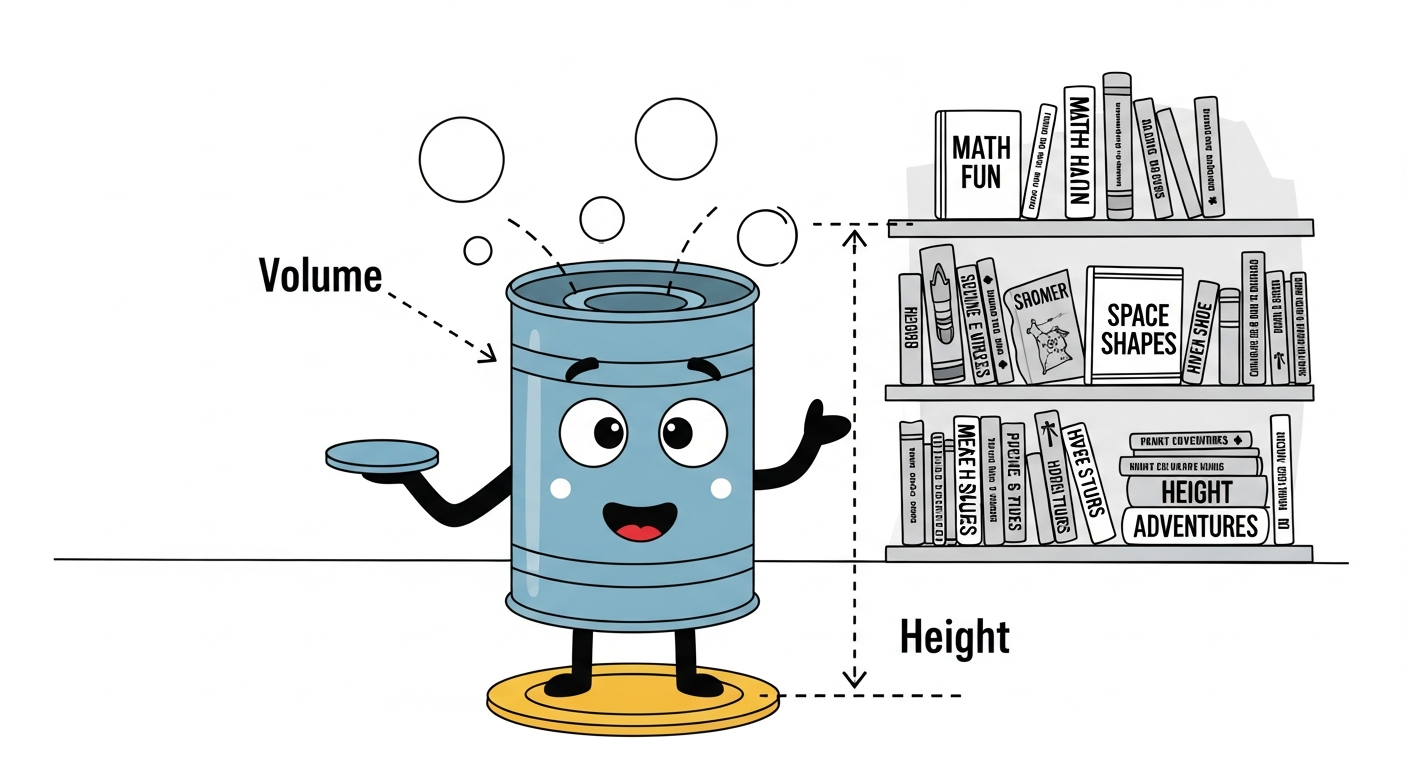
When we talk about the volume of a circle, we’re actually exploring how much space a 3-D shape with a circular base takes up — simple shapes like a cylinder. So the phrase volume of a circle helps us jump from flat shapes into the world of space and height. Think of a cylinder like a tall tin can: its base is a circle, and its height adds the “third dimension”. In this post, we’ll break down how to find that space in a fun, easy-to-understand way.
The first step is to remember that the “circle” part gives us the area of the base, that lovely round shape. Then we stretch that shape up by the height of the cylinder, so we’re asking: how many copies of that base area stack up to fill the whole space? It’s like covering a circular floor with square tiles, then stacking layers of those tiles up to the ceiling. With a little math magic, we get a formula that makes sense and works every time. Soon you’ll see how you can plug in the radius of the base and the height of the shape and find out how much space is inside — easy peasy.
Why We Use a Circle as the Base for Volume Calculations
We use a circle as the base for volume calculations because many real-life objects have round shapes. Think about cans, pipes, cups, and bottles — they all start with a circle at the bottom. The circle makes shapes smooth and even from all sides, so it’s easier to calculate how much space they hold. When we multiply the area of that circle by the height, we find the total volume. Using circles in volume math helps us understand real objects better. It also helps students see how geometry connects with real life. That’s why learning the volume of circle-based shapes is simple and super useful for everyone.
Step-by-Step: Finding the “Volume of a Circle” Shape
To find the volume of a shape with a circular base, we follow a few easy steps. First, measure the radius of the circle, which is the distance from the center to the edge. Next, find the height of the shape — how tall it is. The formula for a cylinder’s volume is V = πr²h. That means we square the radius, multiply by height, and then by π (pi). π is a special number that is about 3.14. Once you multiply them all, you get the total space inside. This formula works for round shapes like tanks, cans, or jars. It’s fun and easy when you follow the steps slowly.
How Radius and Height Change the Volume of a Circle-based Shape
The radius and height are the two main parts that change the volume of a circle-based shape. If you make the radius bigger, the circle gets wider, and the volume grows a lot. That’s because the radius is squared in the formula, so even a small increase makes a big difference. The height also matters — a taller shape means more space inside. If you keep the radius the same but double the height, the volume doubles too. So, both the radius and height decide how much the shape can hold. That’s why measuring them correctly is very important when finding the volume of a circle shape.
Real-Life Examples of Volume of a Circle in Everyday Life
You can find the volume of a circle-based shape all around you. Think about a soda can, a round water tank, or even a pencil holder — all have circular bottoms. When you fill them with liquid, you’re actually using their volume. Bakers use it to know how much cake batter fits in a round pan. Builders use it to measure how much cement fills a round pipe. Scientists and engineers also use it in different machines. So, the “volume of a circle” isn’t just for math class — it helps people everywhere in daily life. Learning it makes the world’s shapes easier to understand.
Common Mistakes When Calculating the Volume of a Circle Shape
Many students make small mistakes when calculating the volume of a circle-based shape. One common error is mixing up radius and diameter. The radius is only half of the diameter, so if you use the full diameter in the formula, the result will be wrong. Another mistake is forgetting to square the radius before multiplying. Some also forget to use the correct value of π (3.14). It’s also easy to skip the units, like cubic centimeters or cubic meters. Checking each step slowly and carefully helps avoid these small mistakes. With practice, you’ll find it super easy to calculate volumes correctly every time.
Practice Problems to Master the Volume of a Circle Concept
Let’s try some fun practice problems to understand the volume of a circle-based shape better.
- A cylinder has a radius of 4 cm and a height of 10 cm. What is its volume?
- A water tank has a circular base with a radius of 6 m and height of 5 m. Find its volume.
- A can has a radius of 3 cm and height of 8 cm. What’s its total space inside?
Try using the formula V = πr²h for each. Solving these problems helps you become confident with real-life examples. Keep practicing — soon you’ll find the “volume of a circle” idea very easy and fun!
Conclusion
Learning about the volume of a circle is fun and helps us understand the shapes we see every day. When we know how to find the volume, we can tell how much space something takes up. The idea is simple — find the area of the circular base, then multiply by the height. Using the right measurements makes the answer perfect. Once you get used to the formula, it feels like solving a small puzzle that always works. Keep practicing and checking your answers step by step. The more you do it, the easier it becomes, and soon you’ll be a little math hero in finding the volume of any circle-based shape!
FAQs
Q1: Can a circle itself have volume?
No, a circle is flat and only has area, not volume. Volume comes when we add height to make a 3D shape like a cylinder or cone.
Q2: What’s the formula for volume of a circle shape?
The basic formula is V = πr²h, where r is radius and h is height.
Q3: Why is π (pi) used in the formula?
π is used because it helps measure the roundness of the circle’s base and makes the formula accurate.