The Rainforest Food Web is like a big nature story where every plant and animal is connected. In the rainforest, sunlight helps plants grow, and plants feed many animals. Then, bigger animals eat smaller animals, and the cycle keeps moving. If one link breaks, the whole system can get weak. This makes the rainforest food web a great example of how nature stays balanced. In this article, we’ll explore tropical rainforest food web, Amazon rainforest food web, and even the temperate rainforest food web. We will also look at easy rainforest food web examples and rainforest food web diagrams that show how everything connects.
What Is a Rainforest Food Web?
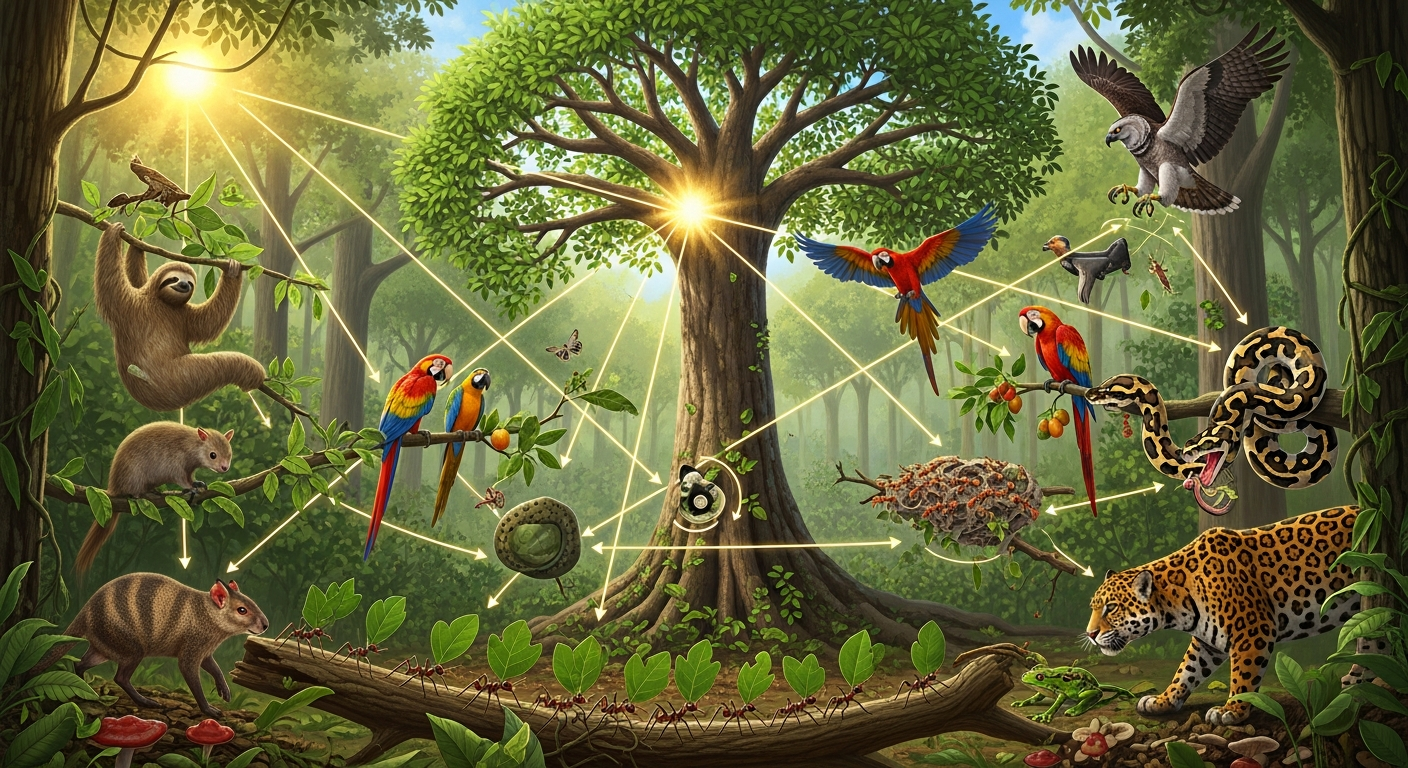
A rainforest food web is a network of plants and animals that eat each other. It starts with producers like trees and plants that make food using sunlight. Then come primary consumers like insects and small animals that eat plants. After that, secondary consumers eat the smaller animals, and top predators eat the secondary consumers. In the rainforest, this web is very complex because there are many species living together. For example, a frog might eat insects, but the frog could also become food for a snake. This is why a rainforest food web is more like a huge map than a simple chain.
The Tropical Rainforest Food Web Explained
A tropical rainforest food web is found near the equator, where it is hot and wet all year. The rainforest has many layers, like the canopy and forest floor. Plants in the canopy get lots of sunlight, while the forest floor gets less. Animals like monkeys, birds, and insects live in different layers. This creates a rich tropical rainforest food web where many animals share food sources. For example, leaves feed insects, insects feed frogs, frogs feed snakes, and snakes feed big cats like jaguars. This web shows how energy moves through the rainforest.
Amazon Rainforest Food Web: The Biggest One
The Amazon rainforest food web is one of the most complex in the world. The Amazon has thousands of species of plants and animals. This means the food web has many connections. In the Amazon, plants are the base. Many insects eat the plants, and small birds eat the insects. Then, larger animals like monkeys or wild cats eat those birds. Even fish in the rivers are part of the Amazon food web. The Amazon rainforest food web diagram often shows how rivers connect to forests. This makes the web even bigger and more powerful.
Temperate Rainforest Food Web: A Cooler Version
The temperate rainforest food web is found in cooler areas like the Pacific Northwest. These forests get lots of rain but are not as hot as tropical rainforests. The main producers are mosses, ferns, and large evergreen trees. Animals like deer, bears, and birds form the next levels. In this food web, salmon are important because they carry energy from the ocean into the forest. Bears eat salmon and then spread nutrients through the forest. This shows how a temperate rainforest food web can be different from tropical ones but still very connected.
Producers: The Foundation of the Rainforest Food Web
In every rainforest food web, producers are the base. Producers are plants that make food using sunlight. In tropical rainforests, producers include huge trees, vines, and colorful flowers. In the Amazon, producers are also plants like orchids and ferns. Producers support all other life because they create energy from sunlight. Without them, the rainforest food web would collapse. That is why deforestation is so dangerous. If trees disappear, the entire rainforest food web loses its foundation.
Primary Consumers: Who Eats the Plants?
Primary consumers are animals that eat plants. In the rainforest, many insects are primary consumers, such as ants, caterpillars, and beetles. Some animals like sloths and deer also eat leaves. Primary consumers are crucial because they move energy from producers to the rest of the food web. For example, in a tropical rainforest food web, caterpillars eat leaves and become food for birds. This shows how important small animals are, even if we don’t notice them.
Secondary Consumers: The Small Predators
Secondary consumers are animals that eat primary consumers. In the rainforest, these include frogs, small birds, snakes, and some mammals. For example, frogs eat insects, and snakes eat frogs. These animals help control insect populations and keep the rainforest balanced. In the Amazon rainforest food web, many snakes and birds are secondary consumers. They also support bigger predators, like jaguars and eagles. This makes the rainforest food web a strong and balanced system.
Top Predators: The Kings of the Rainforest
Top predators are at the top of the food web. They have no natural enemies. In tropical rainforests, top predators include jaguars, harpy eagles, and big snakes like anacondas. In temperate rainforests, bears and wolves can be top predators. These animals keep populations balanced by eating weaker animals. Without top predators, the food web can become crowded, and disease may spread. That is why top predators are essential to the rainforest food web.
Decomposers: The Cleanup Crew
A rainforest food web with decomposers includes fungi, bacteria, and worms. Decomposers break down dead plants and animals. This releases nutrients back into the soil, helping new plants grow. Decomposers are like nature’s recycling system. Without them, the forest would be full of dead matter. In both tropical and temperate rainforests, decomposers are key to keeping the food web alive. They connect the end of one life to the start of another.
Rainforest Food Web Diagram: What It Shows
A rainforest food web diagram is a visual map of who eats whom. It usually shows producers at the bottom, then primary consumers, secondary consumers, and top predators. Arrows show energy flow. A tropical rainforest food web diagram may include animals like monkeys, birds, insects, and jaguars. An Amazon rainforest food web diagram might show fish and river animals too. These diagrams help students understand how energy moves through nature. They also show how one missing link can affect the entire web.
Easy Rainforest Food Web: A Simple Example
An easy rainforest food web example could look like this:
Sun → Tree → Caterpillar → Frog → Snake → Jaguar
This shows how energy moves from the sun to the top predator. Even though it’s simple, it helps explain the main idea. In real rainforests, there are many more connections. But this example is perfect for kids and beginners. It also shows why each part of the web matters. If the tree disappears, the whole web breaks down.
Real Rainforest Food Web Examples
Real rainforest food web examples include animals like:
- Leafcutter ants eating leaves
- Monkeys eating fruits
- Harpy eagles eating monkeys
- Jaguars eating deer
These examples show how many animals depend on each other. In the Amazon, even fish are part of the food web. When trees drop fruit into rivers, fish eat it, and bigger animals feed on fish. These real examples show how connected and alive the rainforest is.
Rainforest Food Web Key Species Table
| Species | Role in Food Web | What They Eat | What Eats Them |
|---|---|---|---|
 Trees & Plants |
Producers | Sunlight & Nutrients | Insects, Herbivores |
|
Leafcutter Ants |
Primary Consumer | Leaves | Frogs, Birds |
|
Caterpillars |
Primary Consumer | Leaves | Birds, Frogs |
|
Frogs |
Secondary Consumer | Insects | Snakes, Birds |
|
Snakes |
Secondary Consumer | Frogs, Small Mammals | Jaguars |
|
Harpy Eagle |
Top Predator | Monkeys, Birds | None |
|
Jaguar |
Top Predator | Deer, Monkeys | None |
|
Fungi & Bacteria |
Decomposers | Dead Plants/Animals | N/A |
|
Salmon |
Primary Consumer | Insects, Small Fish | Bears |
|
Bears |
Top Predator | Fish, Plants | None |
Why the Rainforest Food Web Matters
The rainforest food web is important because it keeps ecosystems alive. Rainforests provide oxygen, clean water, and homes for many animals. They also help control the Earth’s climate. If the food web is damaged by deforestation or pollution, many species may disappear. This can affect humans too, because rainforests help regulate weather and provide medicines. Understanding the rainforest food web helps us protect nature. It shows us that every species has a job, and every job matters.
(FAQs)
1. What is a rainforest food web?
A rainforest food web is a group of plants and animals that are connected through eating and being eaten. It shows how energy moves from the sun to plants, then to animals, and back through decomposers.
2. What is a tropical rainforest food web?
A tropical rainforest food web is found in warm, wet rainforests near the equator. It includes many layers like canopy and forest floor, and it has lots of different animals and plants.
3. How is the Amazon rainforest food web different?
The Amazon rainforest food web is bigger and more complex. It includes rivers and many unique animals like fish, monkeys, and big cats. It is one of the most diverse food webs on Earth.
4. What are decomposers in a rainforest food web?
Decomposers are organisms like fungi and bacteria. They break down dead plants and animals, returning nutrients to the soil. They are essential for the rainforest food web to keep going.
5. Can a rainforest food web be easy to understand?
Yes! An easy rainforest food web example is:
Sun → Tree → Caterpillar → Frog → Snake → Jaguar.
It shows how energy moves step by step.
6. Why are rainforests important to humans?
Rainforests provide oxygen, clean water, medicines, and help control climate. Protecting the rainforest food web helps protect our planet and future.
Conclusion: Protect the Rainforest Food Web
The rainforest food web is a powerful example of how nature works together. Every plant and animal plays a role, and each link helps keep the forest alive. From tropical rainforest food web to temperate rainforest food web, every system depends on balance. By learning about food webs, we can better understand why rainforests need protection. You can help by supporting conservation, reducing waste, and spreading awareness.
Related Post: Vezgieclaptezims Odds Play